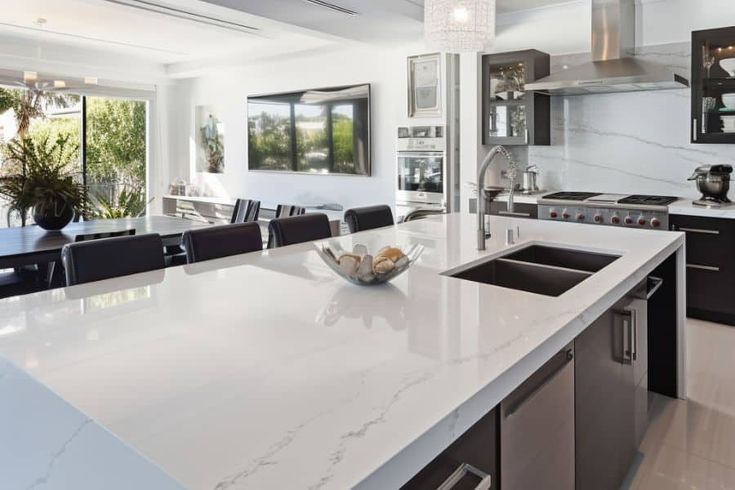
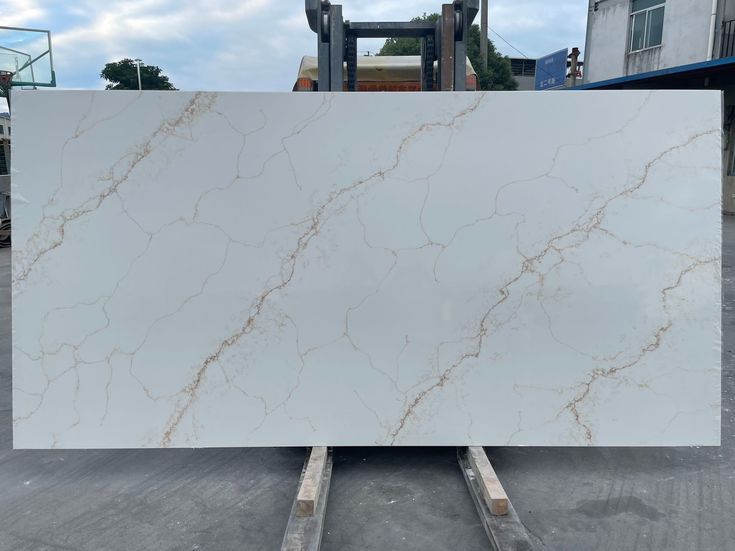
Quartz vs Full Body Slab: Which One Is Better for Your Kitchen Countertop?
Choosing the right kitchen countertop is one of the most important decisions you’ll make while designing or renovating your home. A kitchen countertop isn’t just a work surface—it’s a visual centerpiece, a daily utility zone, and a long-term investment that impacts durability, hygiene, and overall home value.
Two of the most popular modern choices today are Quartz countertops and Full Body Slabs. Homeowners, architects, and interior designers often ask:
“Quartz vs Full Body Slab – which one is actually better for a kitchen countertop?”
The answer depends on your usage, budget, aesthetic preference, and long-term expectations.
In this detailed guide, we’ll break down everything you need to know—composition, durability, heat resistance, maintenance, cost, appearance, and real-life kitchen use—so you can confidently choose the best countertop material for your kitchen.
Understanding Kitchen Countertop Materials (Why the Right Choice Matters)
Your kitchen countertop faces:
-
Daily chopping and cooking
-
Hot utensils and spills
-
Water exposure
-
Oil, turmeric, and acidic food stains
-
Heavy usage over years
That’s why material selection is more important than design alone. A wrong choice can lead to cracks, stains, dullness, or expensive replacements.
Let’s first understand what Quartz and Full Body Slabs really are.
What Is a Quartz Kitchen Countertop?
Quartz countertops are engineered stone surfaces made by combining:
-
90–95% natural quartz crystals
-
Resins and polymers
-
Color pigments
Unlike natural marble or granite, quartz slabs are man-made under controlled conditions, which results in uniform quality and consistent patterns.
Key Features of Quartz Countertops
-
Non-porous surface
-
Consistent color and design
-
Highly resistant to stains
-
Modern, premium appearance
-
Available in matte, glossy, and textured finishes
Because of these features, quartz has become one of the most searched kitchen countertop materials globally.
What Is a Full Body Slab?
A Full Body Slab refers to a slab where the design and color run consistently throughout the entire thickness of the material—not just on the surface.
Full body slabs can be:
-
Full body vitrified slabs
-
Full body porcelain slabs
-
Full body engineered stone slabs
Why “Full Body” Matters
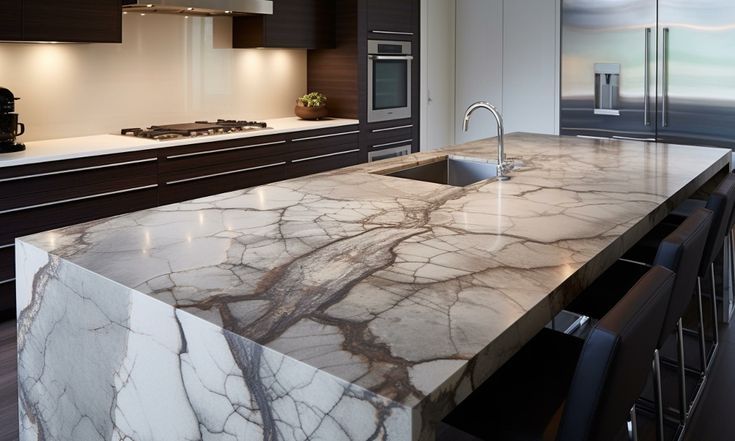
If the slab chips or edges are exposed (like in waterfall countertops), the internal design looks exactly the same as the surface, making it ideal for luxury kitchens.
Key Features of Full Body Slabs
-
Same pattern on surface and edges
-
Extremely strong and dense
-
Highly resistant to scratches
-
Suitable for heavy-duty kitchens
-
Ideal for seamless and bold designs
Quartz vs Full Body Slab: Head-to-Head Comparison
Let’s compare both materials across all critical kitchen parameters.
1. Durability & Strength
Quartz Durability
Quartz is very durable and resistant to:
-
Cracks
-
Chips
-
Minor impacts
However, since it contains resin, it may not handle extreme heat well.
Full Body Slab Durability
Full body slabs—especially porcelain or vitrified ones—are:
-
Extremely hard
-
Highly impact-resistant
-
Designed for heavy commercial use
Winner: Full Body Slab (for heavy-duty kitchens)
2. Heat Resistance (Very Important for Indian Kitchens)
Quartz & Heat
Quartz is not fully heat-resistant.
-
Hot pans directly placed can cause discoloration
-
Resin may weaken under high heat
Using trivets is mandatory.
Full Body Slab & Heat
Full body slabs:
-
Handle high temperatures better
-
Suitable for Indian cooking styles
-
Less risk of heat damage
Winner: Full Body Slab
3. Stain Resistance & Hygiene
Quartz Countertops
-
Non-porous
-
Does not absorb oil, wine, turmeric, or lemon
-
Easy to clean with mild soap
-
Very hygienic for food prep
Full Body Slabs
-
Also non-porous
-
Highly stain-resistant
-
Excellent for spill-heavy kitchens
Winner: Tie (Both are excellent)
4. Scratch & Wear Resistance
Quartz Scratches
Quartz resists daily scratches but:
-
Sharp knives can leave marks over time
-
Cutting boards are recommended
Full Body Slabs
-
Highly scratch-resistant
-
Ideal for rough usage
-
Suitable for busy family kitchens
Winner: Full Body Slab
5. Design, Colors & Visual Appeal
Quartz Design Options
Quartz offers:
-
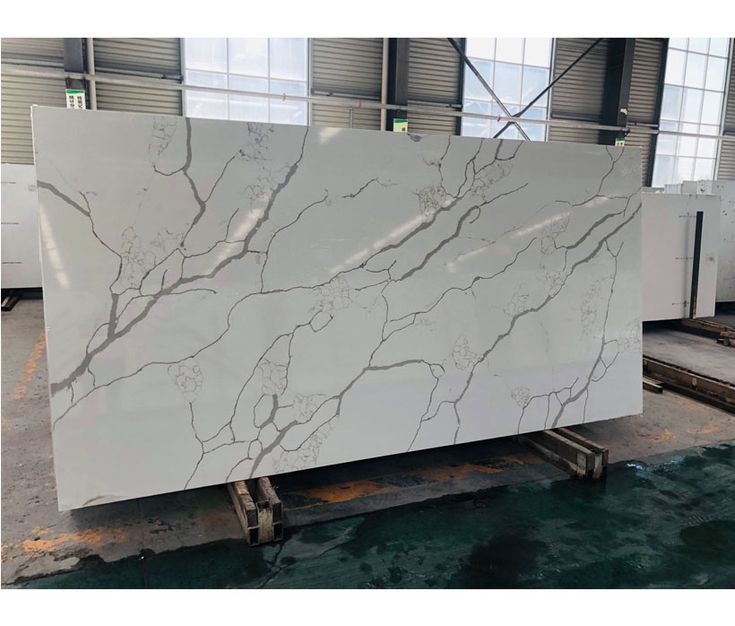
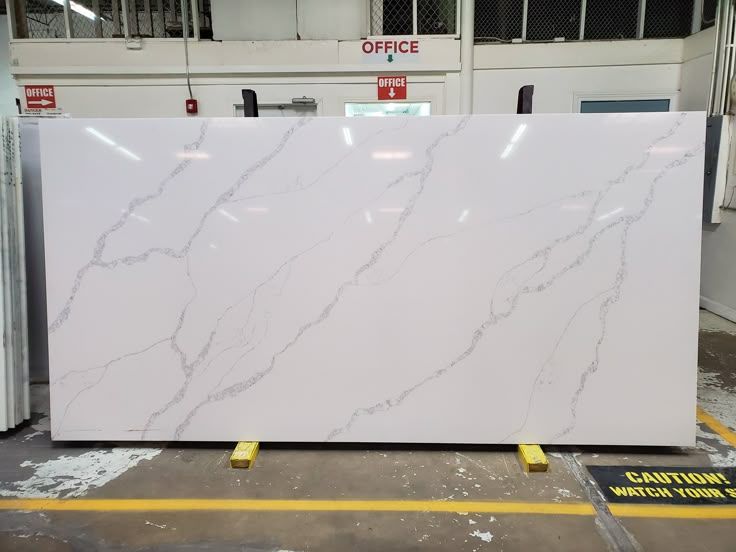
Marble-look quartz
-
Solid colors
-
Concrete textures
-
Veined luxury designs
Perfect for:
-
Modern kitchens
-
Minimalist interiors
-
Contemporary homes
Full Body Slab Designs
Full body slabs excel in:
-
Large-format seamless designs
-
Natural stone looks
-
Dramatic waterfall countertops
-
Edge continuity
Winner: Depends on design preference
6. Edge Finish & Waterfall Countertops
This is where full body slabs shine.
Quartz Edges
-
Surface looks premium
-
Edges may show difference in pattern
-
Requires edge polishing or laminations
Full Body Slab Edges
-
Same design from top to bottom
-
Perfect for waterfall islands
-
No visible pattern break
Winner: Full Body Slab
7. Thickness & Slab Size
Quartz Slab Size
-
Standard thickness: 15–20 mm
-
Limited slab sizes
-
Joints may be visible in large kitchens
Full Body Slabs
-
Available in large-format sizes
-
Thin yet strong
-
Fewer joints and cleaner look
Winner: Full Body Slab
8. Maintenance & Cleaning
Quartz Maintenance
-
Very low maintenance
-
No sealing required
-
Simple daily cleaning
Full Body Slab Maintenance
-
Also low maintenance
-
Resistant to chemicals
-
Easy to clean
Winner: Tie
9. Longevity & Lifespan
Quartz Lifespan
-
15–25 years with proper care
-
Resin aging may occur over decades
Full Body Slab Lifespan
-
Extremely long-lasting
-
Retains color and strength
-
Suitable for lifetime usage
Winner: Full Body Slab
10. Cost Comparison (India)
Quartz Countertop Price
-
Mid to premium range
-
More affordable luxury option
-
Excellent value for money
Full Body Slab Price
-
Generally more expensive
-
Premium installation required
-
Higher upfront cost
Winner: Quartz (budget-friendly luxury)
Which One Is Better for Indian Kitchens?
Choose Quartz If:
-
You want a luxury look at a controlled budget
-
Your kitchen has moderate cooking
-
You prefer consistent color & modern design
-
Easy maintenance is a priority
Choose Full Body Slab If:
-
You cook daily with high heat
-
You want maximum durability
-
You’re designing a premium or modular kitchen
-
You want waterfall countertops or seamless edges
Quartz vs Full Body Slab: Quick Comparison Table
| Feature | Quartz | Full Body Slab |
|---|---|---|
| Heat Resistance | Moderate | High |
| Scratch Resistance | Good | Excellent |
| Edge Continuity | Average | Perfect |
| Maintenance | Low | Low |
| Design Consistency | Surface only | Full body |
| Cost | Medium | High |
| Best For | Modern homes | Luxury kitchens |
Expert Opinion: What Designers & Architects Prefer
-
Interior designers prefer quartz for modern apartments
-
Architects prefer full body slabs for villas & luxury homes
-
Builders use quartz for budget control
-
Premium kitchens often combine both materials
Final Verdict: Quartz vs Full Body Slab – Which One Should You Choose?
There is no single winner—only the right choice for your lifestyle.
-
If you want beauty, hygiene, and value, choose Quartz
-
If you want strength, heat resistance, and seamless luxury, choose Full Body Slab
Your kitchen usage, cooking style, and design vision should guide your decision—not trends alone.