
Marble vs Vitrified: Which Is the Best Flooring for Your Home?
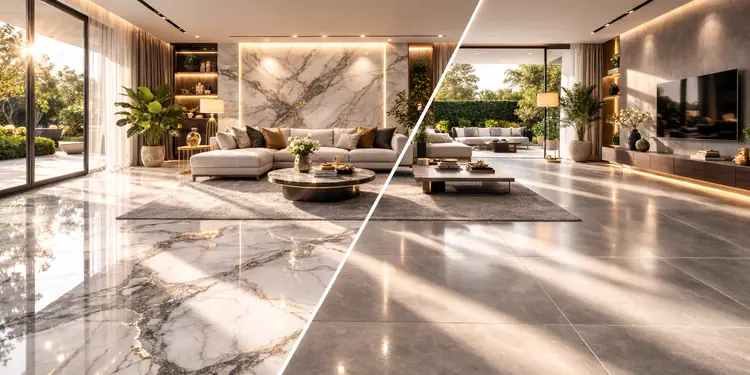
Choosing the right flooring is one of the most important decisions you’ll make when designing or renovating your home. Flooring sets the tone for your interiors, influences comfort, affects maintenance efforts, and even impacts property value. Among the most popular options in Indian homes today, marble flooring and vitrified tiles stand out as top contenders.
But when it comes to marble vs vitrified tiles, which one truly deserves a place in your home?
In this comprehensive guide, we’ll compare marble and vitrified flooring in terms of durability, aesthetics, maintenance, cost, installation, resale value, and suitability for different spaces. By the end of this article, you’ll have a clear understanding of which flooring option is best for your home.
Understanding Marble Flooring
Marble is a natural stone formed over millions of years under high pressure and heat. It has been used in architecture for centuries and continues to be associated with luxury, elegance, and timeless beauty.
Iconic structures like the Taj Mahal and the Pantheon showcase the grandeur and durability of marble, highlighting its enduring appeal.
Key Features of Marble Flooring
Natural stone with unique veining
Available in various types (Italian, Makrana, Indian, etc.)
Cool underfoot
Can be polished multiple times
Adds premium value to homes
Marble flooring is often chosen for living rooms, lobbies, and upscale residences due to its sophisticated appearance.
Understanding Vitrified Tiles
Vitrified tiles are manufactured tiles made by fusing clay and silica at extremely high temperatures. This process creates a glass-like surface that makes them strong, dense, and low in porosity.
They are available in numerous finishes such as:
Polished
Matte
Double-charged
Full-body
Glazed
Marble-look finishes
Vitrified tiles are widely used in modern apartments, commercial spaces, and contemporary homes due to their practicality and affordability.
Marble vs Vitrified Tiles: A Detailed Comparison
Let’s break down the key differences between marble and vitrified flooring across important parameters.
1. Aesthetic Appeal
Marble: Natural Elegance
One of marble’s biggest advantages is its natural beauty. No two marble slabs are identical. The veins, textures, and patterns create a rich and organic look that cannot be perfectly replicated.
If you want:
A luxurious ambience
A classic or royal interior theme
A unique natural pattern
Marble flooring delivers unmatched elegance.
Vitrified Tiles: Consistent and Versatile
Vitrified tiles offer uniformity. If you prefer clean lines and consistent patterns, they are ideal.
Modern manufacturing technology allows vitrified tiles to:
Mimic marble
Imitate wood
Replicate granite
Create contemporary finishes
For minimalistic and modern interiors, vitrified tiles often fit better.
Verdict:
For luxury and uniqueness → Marble
For uniformity and modern style → Vitrified tiles
2. Durability and Strength
Marble
Marble is strong but relatively softer compared to granite. It can:
Scratch under heavy furniture
Stain if not sealed
Develop dull patches over time
However, the advantage is that marble can be repolished multiple times, restoring its shine.
Vitrified Tiles
Vitrified tiles are:
Extremely hard
Scratch-resistant
Stain-resistant
Moisture-resistant
They are less porous than marble, making them ideal for high-traffic areas.
Verdict:
For long-term durability with minimal wear → Vitrified tiles
For natural stone that can be refinished → Marble
3. Maintenance Requirements
Marble Maintenance
Marble is porous and requires:
Regular sealing
Gentle cleaning agents
Immediate stain removal
Periodic polishing
Acidic substances (like lemon juice or vinegar) can damage marble surfaces.
Vitrified Tile Maintenance
Vitrified tiles are low-maintenance:
No sealing required
Easy to clean with regular mopping
Resistant to stains and moisture
They are ideal for busy households where convenience matters.
Verdict:
For easy, hassle-free maintenance → Vitrified tiles
For premium aesthetics with regular care → Marble
4. Cost Comparison
Cost plays a crucial role when deciding between marble vs vitrified tiles.
Marble Cost
Marble is generally more expensive due to:
Natural extraction
Transportation
Installation complexity
Polishing costs
Italian marble is significantly costlier than Indian marble.
Additionally, installation requires skilled labor and increases overall flooring expenses.
Vitrified Tile Cost
Vitrified tiles are more budget-friendly:
Lower material cost
Easier installation
Minimal long-term maintenance costs
They are suitable for homeowners working within a fixed budget.
Verdict:
For luxury investment → Marble
For cost-effective flooring → Vitrified tiles
5. Installation Process
Marble Installation
Requires professional stone craftsmen
Involves leveling and polishing
Takes longer to complete
More wastage during cutting
Vitrified Tile Installation
Faster installation
Standardized sizes
Less wastage
Easier replacement if damaged
If you are on a tight construction timeline, vitrified tiles are more convenient.
6. Resale Value Impact
Homes with premium marble flooring often:
Appear more luxurious
Attract high-end buyers
Have better resale perception
Marble flooring in main areas like the living room enhances overall property value.
Vitrified tiles, while practical, may not significantly increase resale value in premium housing markets.
7. Suitability for Different Areas of the House
Let’s break this down room by room:
Living Room
Marble: Ideal for large, luxurious spaces
Vitrified: Great for modern apartments
Bedrooms
Marble: Cool and elegant
Vitrified: Warm look with wood-finish options
Kitchen
Marble: Can stain easily
Vitrified: Better due to stain resistance
Bathrooms
Marble: Needs proper sealing
Vitrified: Preferred for moisture resistance
Outdoor Areas
Marble: Can weather over time
Vitrified (anti-skid variants): Better choice
8. Climate Considerations
In hot regions like India, marble has a natural cooling property, making it comfortable underfoot during summers.
Vitrified tiles can also remain cool but may not provide the same natural thermal feel as marble.
If you live in a hot climate and prefer cool flooring, marble might be advantageous.
9. Environmental Impact
Marble:
Natural material
Requires quarrying
Higher transportation emissions
Vitrified Tiles:
Manufactured product
Energy-intensive production process
Both have environmental impacts, but responsible sourcing and choosing local suppliers can reduce carbon footprint.
Pros and Cons Summary
Marble Flooring
Pros
Luxurious appearance
Unique patterns
High resale value
Can be repolished
Cons
Expensive
High maintenance
Prone to staining
Requires sealing
Vitrified Tiles
Pros
Budget-friendly
Low maintenance
Durable and scratch-resistant
Wide variety of designs
Cons
Less natural appearance
Cannot be repolished
May feel less premium in high-end homes
Marble vs Vitrified: Which One Should You Choose?
The right choice depends on your priorities:
Choose Marble If:
You want a premium, timeless look
Budget is not a major constraint
You are building a luxury home
You are willing to invest in maintenance
Choose Vitrified Tiles If:
You want affordable flooring
You prefer low maintenance
You need durability in high-traffic areas
You want design versatility
Frequently Asked Questions (FAQs)
Is marble better than vitrified tiles?
Marble is better for luxury and resale value, while vitrified tiles are better for durability and low maintenance.
Which flooring lasts longer?
Vitrified tiles generally last longer with minimal wear, but marble can also last decades if properly maintained.
Is marble slippery?
Polished marble can be slippery. Anti-skid finishes are recommended for wet areas.
Do vitrified tiles crack easily?
High-quality vitrified tiles are highly resistant to cracking under normal usage.
Final Verdict: Marble or Vitrified?
When comparing marble vs vitrified tiles, there is no universal winner. It ultimately depends on your lifestyle, budget, aesthetic preferences, and long-term goals.
If your dream home includes grand interiors and timeless elegance, marble flooring can transform your space into a luxurious retreat.
If you value practicality, cost efficiency, and easy maintenance, vitrified tiles offer a modern, durable solution that meets everyday demands.
The smartest approach?
Many homeowners combine both—using marble in living areas and vitrified tiles in kitchens, bathrooms, and utility spaces.
Conclusion
Flooring is not just a functional choice—it is a design statement. Whether you choose marble or vitrified tiles, make sure your decision aligns with your home’s style, your maintenance capacity, and your financial plan.
Take your time, compare samples, consult experts, and visualize how each flooring type will look in your space. A well-informed decision today will enhance your comfort and property value for decades to come.
If you found this guide helpful, consider sharing it with others planning a home renovation. And for more expert insights on home design, construction tips, and material comparisons, stay tuned for our upcoming articles.