
Which Type of Marble Is the Best for Kitchens? A Complete Guide for Homeowners
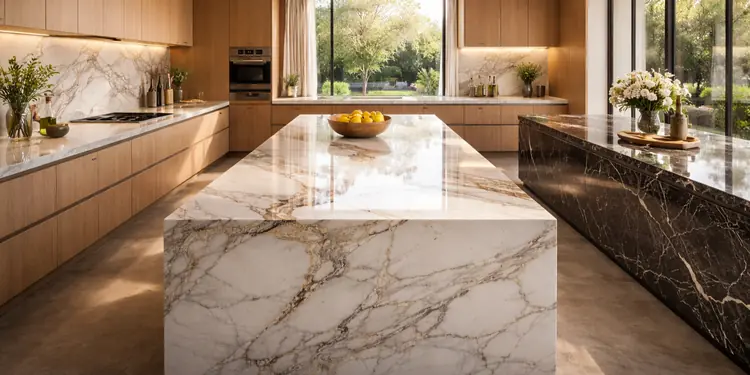
Marble has long been associated with luxury, elegance, and timeless beauty. From ancient Roman architecture to modern designer kitchens, it continues to be one of the most sought-after natural stones in interior design. But when it comes to choosing the best marble for kitchens, homeowners often face an important question: which type of marble is most suitable for countertops, flooring, and backsplashes?
With various options offering different colors, veining patterns, durability levels, and price points, selecting the right marble requires careful evaluation. This guide breaks down the most popular kitchen marble types, their pros and cons, durability factors, maintenance requirements, and expert selection tips.
Why Marble Is a Popular Choice for Kitchens
1. Timeless Aesthetic Appeal
Marble’s natural veining is unique to every slab. No two pieces are identical, giving kitchens a bespoke and high-end appearance.
2. Natural Cooling Properties
Marble stays naturally cool, making it ideal for baking and dough preparation.
3. Increased Property Value
Marble countertops and flooring often enhance resale value due to their premium perception.
4. Design Versatility
Marble complements traditional, contemporary, minimalist, and luxury kitchen designs.
Important: Marble is softer and more porous than granite or quartz, so selecting the right type for kitchen use is essential.
Best Types of Marble for Kitchens
1. Carrara Marble
Overview: Carrara marble originates from Italy and features a soft white to blue-gray background with subtle, feathery veining.
Pros:
- More affordable than other Italian marbles
- Elegant and understated
- Widely available
Cons:
- Relatively soft
- Prone to etching from acidic foods
- Requires regular sealing
Best For: Classic white marble kitchens on a moderate budget.
2. Calacatta Marble
Overview: Calacatta marble is rarer and more luxurious, featuring bold, dramatic veining on a bright white background.
Pros:
- Striking visual impact
- Premium luxury appeal
- Enhances resale value
Cons:
- Expensive
- Susceptible to staining and etching
- Requires careful maintenance
Best For: Statement kitchen islands and luxury interiors.
3. Statuario Marble
Overview: Statuario marble combines the brightness of Calacatta with refined, balanced veining. It is considered one of the most prestigious marble varieties.
Pros:
- Bright white background
- Elegant veining patterns
- Ultra-premium aesthetic
Cons:
- Very high price point
- Limited availability
- Professional installation required
Best For: High-end kitchens where aesthetics are prioritized.
4. Makrana Marble
Overview: Makrana marble from India is known for its durability and historical use in iconic monuments.
Pros:
- High density and durability
- Lower water absorption
- Cost-effective compared to imports
Cons:
- Limited color variation
- Needs polishing to maintain shine
Best For: Durable and practical kitchen installations, especially in humid climates.
5. Emperador Marble
Overview: Emperador marble features rich brown tones with light veining.
Pros:
- Dark tone hides stains better
- Adds warmth to interiors
- Pairs well with wood cabinetry
Cons:
- Can darken small kitchens
- Requires sealing
Best For: Traditional or rustic kitchen designs.
6. Crema Marfil Marble
Overview: Crema Marfil marble offers soft beige tones with subtle veining.
Pros:
- Neutral and versatile
- Brightens warm-toned kitchens
- Visually forgiving
Cons:
- Softer than granite
- Needs periodic sealing
Best For: Neutral and warm kitchen aesthetics.
Durability Considerations
Marble is generally softer than granite and engineered quartz. It can scratch, stain, and etch if not properly sealed. Among the options discussed, Makrana marble is often regarded as particularly durable in humid and high-use kitchens.
If maximum durability and low maintenance are primary concerns, alternatives like granite or quartz may be worth considering.
Maintenance Tips for Marble Kitchens
- Seal surfaces every 6–12 months
- Clean spills immediately
- Avoid acidic or abrasive cleaners
- Use cutting boards and trivets
- Polish periodically
Cost & Luxury Comparison
| Marble Type | Price Level | Luxury Appeal | Maintenance |
|---|---|---|---|
| Carrara | Moderate | Classic | Moderate |
| Calacatta | High | Premium | High |
| Statuario | Very High | Ultra Luxury | High |
| Makrana | Affordable–Moderate | High Value | Moderate |
| Emperador | Moderate | Warm Elegant | Moderate |
| Crema Marfil | Moderate | Soft Luxury | Moderate |
Final Verdict: Which Marble Is Best?
There is no single “best” marble for every kitchen. The ideal choice depends on your budget, maintenance expectations, and design preferences:
- Best Budget Option: Carrara
- Best Luxury Option: Calacatta
- Best Ultra-Premium Option: Statuario
- Best Durable Indian Option: Makrana
- Best Warm-Toned Option: Emperador
- Best Neutral Option: Crema Marfil
Marble requires care, but its beauty and elegance are unmatched. With proper sealing and maintenance, a marble kitchen can remain stunning for decades.