
Rajasthan vs South Granite – Which One Should You Choose?
31 Jan 2026
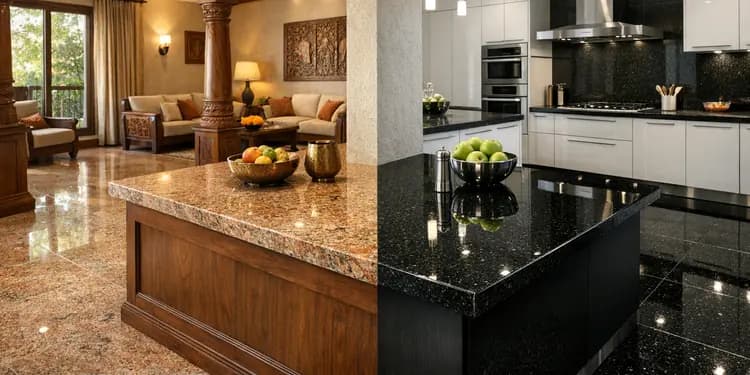
However, when you start exploring options in the Indian market, you’ll quickly come across a common dilemma: Rajasthan Granite vs South Granite – which one is better?
Both varieties are widely used across India and exported globally. Yet, they differ significantly in terms of origin, appearance, durability, pricing, availability, and application suitability.
Understanding Granite: Why It’s a Popular Choice
Granite is an igneous rock formed from cooled magma beneath the Earth’s surface. It is known for:- Exceptional hardness and strength
- High resistance to scratches and heat
- Low porosity (when properly sealed)
- Long lifespan
- Wide range of colors and patterns
What Is Rajasthan Granite?
Rajasthan granite is quarried primarily in regions like Jalore, Udaipur, Barmer, and Sirohi.Key Characteristics of Rajasthan Granite
Color Variety- Rosy Pink
- Lakha Red
- Desert Brown
- Jhansi Red
- Chima Pink
- Medium to fine grain texture
- Cost-effective for North and East India
- Good strength and durability
What Is South Granite?
South granite is quarried in:- Karnataka
- Tamil Nadu
- Andhra Pradesh
- Telangana
Key Characteristics of South Granite
Darker and Richer Colors- Absolute Black
- Black Galaxy
- Tan Brown
- Steel Grey
- Vizag Blue
- Higher density and strength
- Premium polish finish
- Higher cost due to export demand
Rajasthan vs South Granite: Detailed Comparison
| Factor | Rajasthan Granite | South Granite |
|---|---|---|
| Appearance | Subtle, earthy tones | Bold, dark, dramatic shades |
| Durability | Strong and reliable | Slightly denser and harder |
| Price | Budget-friendly | Premium pricing |
| Best For | Flooring, bulk projects | Kitchen countertops, luxury spaces |
| Availability (East India) | Easily available | Available but higher logistics cost |
Strength and Durability
- South granite is often slightly denser and retains polish longer.
- Rajasthan granite is durable but may require more maintenance in high-impact areas.
Price Comparison
- Rajasthan granite is generally more economical.
- South granite tends to be premium-priced.
- Transportation costs impact final pricing.
Ideal Applications
Best Uses for Rajasthan Granite
- Residential flooring
- Staircases
- Wall cladding
- Budget-friendly kitchen platforms
- Outdoor paving
Best Uses for South Granite
- Kitchen countertops
- Commercial flooring
- Hotel lobbies
- Luxury homes
- High-end office interiors
Popular Granite Varieties
| Region | Popular Types |
|---|---|
| Rajasthan | Rosy Pink, Lakha Red, Desert Brown, Chima Pink, Alaska White |
| South India | Absolute Black, Black Galaxy, Tan Brown, Steel Grey, Vizag Blue |
Maintenance Requirements
Both varieties require:- Periodic sealing
- Mild detergent cleaning
- Avoiding acidic cleaners
How to Choose Between Rajasthan and South Granite
- Budget: Limited → Rajasthan | Premium → South
- Application: Large flooring → Rajasthan | Heavy-use kitchen → South
- Aesthetic: Warm tones → Rajasthan | Modern dark tones → South
- Location: North/East India → Rajasthan may be more cost-effective
Expert Tips Before Buying Granite
- Inspect slabs in person
- Check for cracks and resin filling
- Confirm thickness (18mm vs 20mm)
- Verify polish quality
- Choose a reputable supplier
- Compare full slabs, not just samples
Common Myths
- Myth: South Granite Is Always Better
Reality: It depends on use and budget. - Myth: Rajasthan Granite Is Low Quality
Reality: Many varieties are highly durable and exported. - Myth: Dark Granite Is Stronger
Reality: Strength depends on density and mineral composition.
Final Verdict
Choose Rajasthan Granite if:
- You want cost-effective flooring.
- You prefer warm, earthy tones.
- You need bulk material for large projects.
Choose South Granite if:
- You want a premium, luxurious finish.
- You are designing a high-end kitchen.
- You prioritize durability and polish retention.
Conclusion
The debate between Rajasthan granite and South granite comes down to application, aesthetics, durability, and budget. Both are excellent natural stone options.Before making your final decision:
- Compare slabs physically
- Evaluate pricing carefully
- Consult a trusted supplier